

Traveling to the USA with prescription drugs is allowed, and for most medicines it’s easy. Keep each medicine in its original pharmacy container, bring a copy of the prescription or a doctor’s letter, pack it in your carry-on and declare it to US Customs when you land. Visitors can usually bring up to a 90-day supply for personal use. The real risks are controlled drugs, medicines that aren’t approved in the US, and anything containing cannabis.
Three agencies touch your medicine on the way in: TSA at airport security, CBP at the border and the FDA and DEA behind the rules. This guide puts all of it in one place, with a packing checklist, a table of what each agency checks and a plan for what to do if your pills go missing mid-trip.
💊 Quick Answer: How to Bring Prescription Medicine Into the US
- Amount: personal use only; for visitors, generally no more than a 90-day supply.
- Packaging: original labeled containers with your name, the drug and the dose.
- Paperwork: a copy of the prescription or a doctor’s letter in English, using generic drug names.
- Declare it: tell the CBP officer about all medicines, and always about controlled drugs.
- Leave at home: cannabis products (even medical) and drugs that aren’t legal in the US.
This guide is general travel information, not medical or legal advice. Check with your doctor or pharmacist about your own medicines.
In this guide
- Who checks what: FDA, CBP, DEA and TSA
- How much medicine you can bring
- Controlled substances and banned drugs
- Before you fly: doctor, letter, insurance
- How to pack and get through TSA
- Declaring medicine at US Customs
- Medicine on trips inside the USA
- Lost or run out of medicine in the US
- Mistakes to avoid
- FAQ
Traveling to the USA With Prescription Drugs: Who Checks What
Each agency has a different job, which is why travelers get mixed messages online. TSA cares about safety on the plane. CBP and the FDA care about what enters the country. The DEA sets the rules for controlled drugs.
| Agency | Where you meet it | What it checks | Key rule |
|---|---|---|---|
| 🛡️ TSA | Security checkpoint at US airports | That medicine is safe to fly | No limit on pills; medical liquids over 3.4 oz allowed if declared |
| 🛂 CBP | Border on arrival | What you’re bringing in | Declare medicine; original containers; prescription or letter |
| 🏛️ FDA | Behind CBP’s decisions | Whether a drug may be imported | Visitors: generally up to a 90-day supply for personal use |
| ⚖️ DEA | Behind CBP’s decisions | Controlled substances | Must be declared and kept in the original container |
Sources: FDA personal importation policy, 21 CFR 1301.26, TSA special procedures. Checked November 2026.
Here’s how that plays out. Sofia flies from Madrid to Boston with her thyroid tablets and a blood pressure medicine. Security in Madrid follows European rules, so the US agencies don’t come in until she lands. In Boston, she ticks “yes” for carrying medicine when the CBP officer asks, shows the labeled boxes and her prescription, and walks on. Total extra time: about a minute.
How Much Medicine Can You Bring Into the US?
If you’re a visitor, the FDA’s personal importation page says it will generally allow foreign nationals to bring or ship a 90-day supply of their medicine. That’s a guideline officers use, not a guaranteed allowance, and the amount still has to look like personal use.
- Trip under 90 days: bring enough for the trip plus a few days’ spare for delays.
- Longer stay (say, six months with your children): bring 90 days and plan the rest. Options include a US doctor visit for a new prescription or a family member shipping the next batch, which the FDA reviews case by case.
- US citizens and green card holders: medicine you bought abroad is treated more strictly than medicine you took with you from home. Bringing back your own US prescriptions is routine.
Shipping medicine by mail is getting harder. New customs rules for low-value international parcels were due to start in October 2026 and have been pushed back, and officials said the FDA will keep judging personal medicine shipments case by case. If you rely on mailed refills, check the latest status before you count on it.
Controlled Substances and Drugs You Shouldn’t Bring
Controlled substances include strong painkillers (like oxycodone or codeine), ADHD medicines (like Adderall or Ritalin), sleeping pills and anxiety medicines (like Xanax or Valium), and testosterone. You can bring them for your own medical use, but under DEA rule 21 CFR 1301.26 they must be in the original container and declared at the border. US residents bringing back controlled drugs bought abroad are limited to 50 dosage units.
| Type of medicine | Can you bring it? | What you need |
|---|---|---|
| 💊 Everyday prescriptions (blood pressure, diabetes, thyroid) | ✅ Yes | Original container, copy of prescription |
| 💉 Insulin and other injectables | ✅ Yes | Prescription label, syringes packed with the medicine, doctor’s note helps |
| 🧠 Controlled drugs (ADHD, opioids, benzodiazepines) | ⚠️ Yes, with care | Original container, doctor’s letter, declare to CBP |
| 🌿 Medical cannabis, THC products | ❌ No | Illegal under federal law, even with a prescription |
| 🚫 Drugs not approved in the US (for example metamizole/dipyrone) | ❌ Usually not | Ask your doctor for a US-approved alternative |
| 🧴 Over-the-counter medicines and vitamins | ✅ Yes | Keep them in their retail packaging |
Medicines sold over the counter in some countries, such as codeine combinations, are prescription-only and controlled in the US.
Now that you know what’s allowed, let’s get the paperwork ready a few weeks before you fly.
Before You Fly: Doctor Visit, Letter and Insurance
Book a short appointment with your doctor about three to four weeks before the trip. You’re there for four things.
- Enough supply for the whole trip plus 3–7 extra days, within the 90-day guideline.
- A doctor’s letter in English listing your condition, each medicine’s generic name, the dose and that it’s for your personal use. It’s most important for controlled drugs and injectables, as the CDC’s travel medicine guidance also advises.
- A dosing plan for time zones. Flying from Delhi to New York shifts your day by 9½ to 10½ hours. Ask how to move insulin or other timed doses across that gap.
- A check for US approval. If a medicine isn’t sold in the US, ask for an alternative that is, so you can refill it here if needed.

Then sort out health insurance. A single US emergency room visit can cost thousands of dollars, and your home insurance often won’t cover it. Parents visiting family should read our comparison of visitor medical insurance for parents visiting the USA, and note that many plans exclude pre-existing conditions unless you buy specific cover. Applying for a visitor visa first? Our B1/B2 visa guide explains the medical trip rules too.
How to Pack Medicine and Get Through TSA
Pack all medicine in your carry-on, never in checked luggage. Bags get delayed, and a lost bag with your insulin inside turns a holiday into an emergency. US airport security rules on the TSA special procedures page are friendlier than many people expect.
- Pills and tablets: no set limit, but they go through screening. TSA doesn’t require original bottles; it recommends clear labels. For international trips, keep original containers anyway for customs.
- Liquid medicine: you can carry more than 3.4 oz (100 ml) in reasonable amounts. Take it out of your bag and tell the officer at the start of screening.
- Cooling: ice packs and gel packs for medicine are allowed; have them frozen or partly frozen at the checkpoint. A small insulated cooler bag works well.
- Syringes and pens: unused syringes are allowed with the injectable medicine they go with. Tell the officer. Used needles go in a sharps container.
- Pill organizers: fine for daily use on the trip, but bring the labeled containers too. A weekly organizer full of loose white pills can’t be identified at customs.

✅ Medication travel kit checklist
- ☐ Medicine in original pharmacy containers
- ☐ Copy of each prescription (generic names)
- ☐ Doctor’s letter in English for controlled drugs and injectables
- ☐ 3–7 extra days of doses for delays
- ☐ Insulated cooler with frozen packs, if needed
- ☐ Syringes or pens packed with the medicine
- ☐ Medication list with doses saved on your phone
- ☐ Travel insurance card and policy number
Declaring Medicine at US Customs
Declare your medicine when you arrive. Most airports now use digital kiosks or apps instead of the old paper customs form, but the officer will still ask what you’re bringing. Say you have prescription medicine, name any controlled drugs, and hand over the containers and letter if asked. CBP’s guidance for prohibited and restricted items covers medication in the same terms.

What if an officer has doubts? You may be sent to secondary inspection, where they check the drug, the amount and your paperwork. Ordinary medicine for your own use is almost always returned to you. A medicine that’s banned in the US can be taken, so it’s far better to swap it before you travel.
Green card holder coming home with family medicine? Our guide to travel documents for green card holders covers the rest of the border process.
Traveling Inside the USA With Medicine
Once you’re in, flights between US cities follow the same TSA rules above, with no customs step. Road trips are simpler still, but keep two things in mind. First, some states have their own rules about carrying prescription drugs outside a labeled container, so the original bottle is the safe choice. Second, marijuana that’s legal in one state is still illegal at airports and on federal land such as national parks.
Heat matters too. A car parked at a Utah trailhead in July gets hot enough to spoil insulin and some liquid medicines. Keep them in an insulated bag and take them with you. Our guide to the best time to visit the USA shows which regions get extreme heat and when. Pregnant travelers will find extra advice in our guide to traveling while pregnant in the United States.
Lost Your Medicine or Running Out in the US?
US pharmacies can’t fill a foreign prescription, so you’ll need a US-licensed prescriber. That sounds worse than it is.
- Call your travel insurer first. Many have a 24-hour line that books a doctor and tells you what’s covered.
- Visit an urgent care clinic or a retail clinic inside a large pharmacy. Bring your empty box, prescription copy or medication list.
- Try a telehealth visit with a US-licensed doctor for a non-controlled medicine. Controlled drugs usually need more steps.
- Ask the pharmacist about price. Without US insurance, generic versions and discount programs can cut the cost a lot.
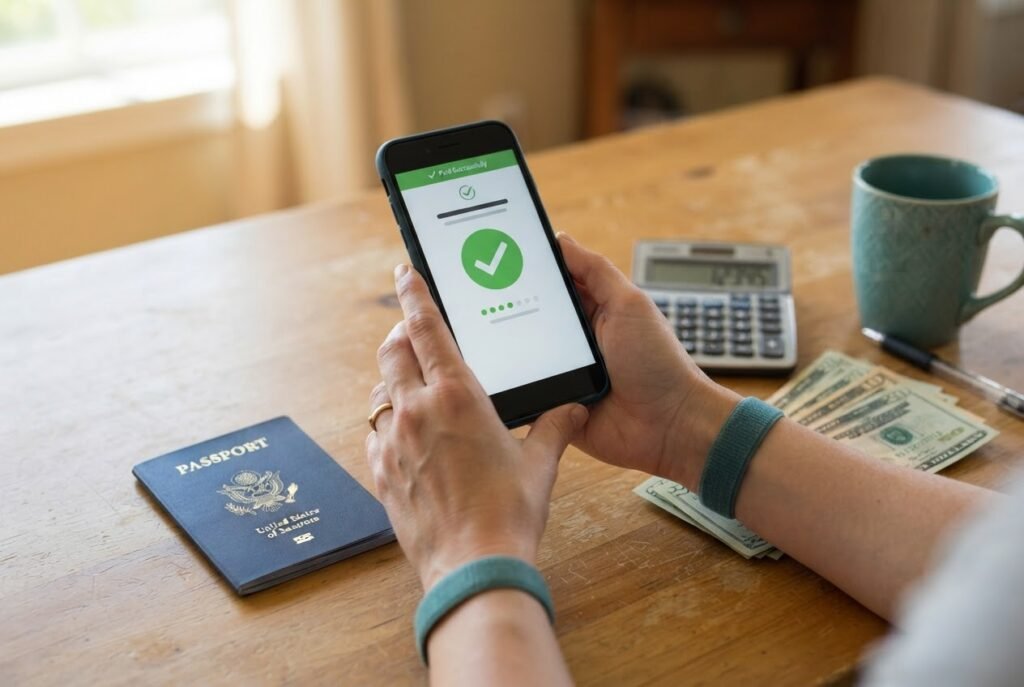
A reminder app on your phone helps you keep doses on time across time zones, and a photo of every label means you can show a doctor exactly what you take. For the cost side of the trip, see our breakdown of daily travel costs in the USA by city.
Mistakes to Avoid When Flying With Medication
⚠️ Avoid these
- Packing medicine in checked luggage. Lost bags are common; your medicine shouldn’t be in one.
- Loose pills in a bag or unlabeled organizer. Customs can’t identify them.
- Not declaring controlled drugs. It can lead to seizure, fines or a refused entry.
- Bringing CBD, THC or medical cannabis. Federal law applies at the border and at airports.
- Bringing a year’s supply “to save money.” Large amounts look like resale.
- Relying on a brand name only. US doctors and pharmacists need the generic name.
- Forgetting insurance. One emergency visit can cost more than the whole trip.
Frequently Asked Questions
Can I bring my prescription medication to the US?
Yes. Bring it for personal use in the original labeled container, with a copy of the prescription or a doctor’s letter, and declare it to CBP when you arrive. Visitors can generally bring up to a 90-day supply.
Do I need to declare prescription medication at US customs?
Yes, you should declare it. Controlled substances must be declared. Declaring ordinary medicine usually takes a minute and avoids problems if your bag is searched.
How much medicine can I bring into the US?
The FDA generally allows foreign visitors to bring a 90-day supply for personal use. US residents bringing back controlled drugs bought abroad are limited to 50 dosage units.
Do pills have to be in their original bottles to fly?
TSA doesn’t require original bottles for security screening, but it recommends clear labels. For international trips and in some states, original labeled containers are the safe choice because customs officers need to identify the medicine.
Can I bring liquid medicine over 3.4 oz on a plane?
Yes. Medically necessary liquids are allowed in reasonable quantities above 3.4 oz. Separate them from your other items and tell the TSA officer at the start of screening.
Can I fill a foreign prescription at a US pharmacy?
No. US pharmacies need a prescription from a US-licensed prescriber. Visit an urgent care clinic or use a US telehealth service, and bring your old label or prescription copy.
The Bottom Line
Bringing prescription drugs to the USA comes down to five habits: original labeled containers, a prescription copy or doctor’s letter with generic names, no more than about 90 days’ supply, everything in your carry-on, and an honest declaration at customs. Add travel insurance and a backup plan for refills, and your health stays on schedule while you enjoy the trip.
Book that doctor’s appointment now, then work through the checklist above a week before you fly. If you take a controlled or unusual medicine, check it with your doctor and the official links in this guide before you pack.
Keep learning: more USA trip planning guides from Touring Diary Adventure
- Visitor medical insurance for parents visiting the USA
- Travel documents for green card holders
- Best time to visit the USA
Sources: U.S. Food and Drug Administration (personal importation); U.S. Customs and Border Protection (prohibited and restricted items); DEA regulation 21 CFR 1301.26; TSA (special procedures, medication screening); CDC (traveling with medicine); Congressional Research Service brief IF11056 (March 2026); KFF Health News reporting on international mail rules (October 2026). Checked November 2026. This guide is general information, not medical or legal advice.
Flying to the US with a medicine you’re unsure about? Ask in the comments, and we’ll point you to the right official source.



Pingback: Which Health Insurances are Best for Indian visitors in USA?