B1/B2 Visa from Bangladesh (2026): Visa Bond, Fees, Documents and Interview Guide
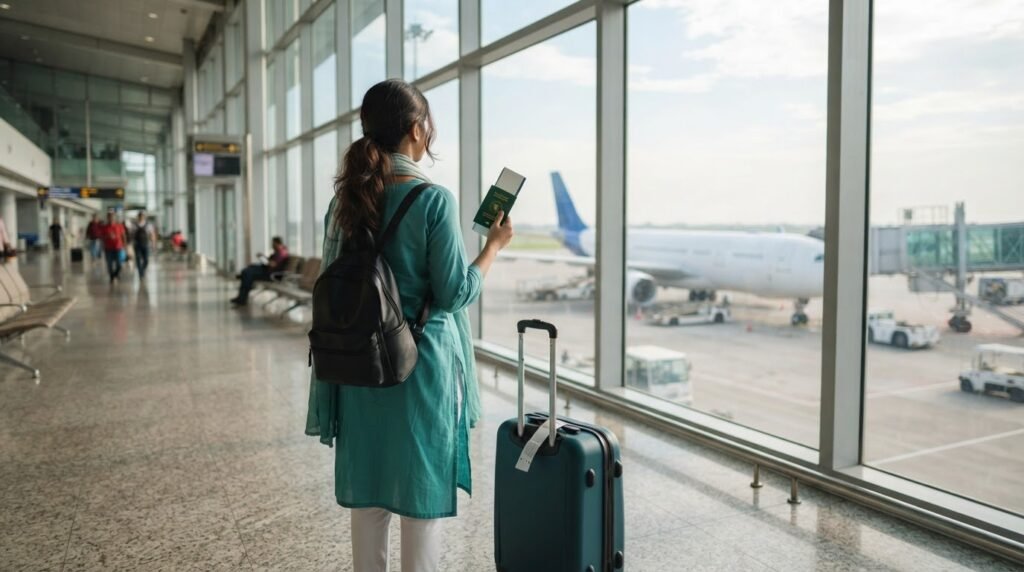
Getting a B1/B2 visa from Bangladesh is still possible in 2026, but the rules have changed a lot since most guides were written. You’ll fill in the DS-160, pay the $185 fee and sit an in-person interview at the U.S. Embassy in Dhaka. If you’re approved, you’ll now also have to post a refundable visa bond of $10,000, $15,000 or $20,000 before the visa is printed.
That bond surprises a lot of families. So does the wait: appointments in Dhaka have been running many months out. This guide walks you through the whole process as it works today, from the first form to the day you land, with the real costs, the documents that actually help, and the mistakes that sink good applications.
🧳 Quick Answer: How to Get a US Visit Visa from Bangladesh in 2026
- Form: complete the online DS-160 and print the confirmation page.
- Fee: pay the $185 visa application (MRV) fee. It isn’t refunded if you’re refused.
- Interview: book and attend an in-person interview at the U.S. Embassy in Dhaka. Almost everyone must appear now.
- Visa bond: if approved, pay a bond of $10,000, $15,000 or $20,000 online, only when the officer tells you to. It comes back if you follow the rules.
- Travel: enter and leave the US by commercial flight, and never overstay the date on your I-94 record.
In this guide
What a B1/B2 Visa Lets You Do
The B1/B2 is a temporary visitor visa. B1 covers short business trips and B2 covers tourism, family visits and medical care, and most people from Bangladesh get a combined B1/B2. It never allows you to work for a US employer or study for credit.
| Purpose | Allowed? | Example |
|---|---|---|
| ✈️ Tourism and sightseeing | ✅ B2 | Two weeks in New York and Washington, DC |
| 👪 Visiting family or friends | ✅ B2 | Parents visiting a son who studies in Texas |
| 🏥 Medical treatment | ✅ B2 | Surgery at a US hospital, with a letter and cost estimate |
| 💼 Meetings, conferences, contract talks | ✅ B1 | A garment exporter meeting buyers in Los Angeles |
| 💵 Paid work for a US company | ❌ No | Needs a work visa such as H-1B |
| 🎓 Full-time study | ❌ No | Needs an F-1 student visa |
Based on the U.S. Department of State’s visitor visa rules.
Here’s a quick real-life check. Rahima is a schoolteacher in Sylhet whose daughter just had a baby in New Jersey. She wants to stay six weeks to help out. That’s a classic B2 trip. Her cousin Tanvir owns a small leather business in Dhaka and wants to meet two buyers at a trade show in Las Vegas. That’s B1. Both can travel on the same type of B1/B2 visa, because the officer looks at what you’ll actually do, not just the label.
Full details are on the State Department’s official visitor visa page. Now that you know what the visa covers, let’s look at what’s new, because 2026 changed the math for Bangladeshi applicants.
What Changed for Bangladeshi Applicants in 2025–2026
Four changes matter most: a mandatory visa bond, in-person interviews for nearly everyone, a rule that you apply in your home country, and long appointment waits. If a friend got a visa in 2023, their experience won’t match yours.
- Visa bond (January 21, 2026): Bangladesh was added to the US visa bond program, so approved B1/B2 applicants must post a bond before the visa is issued. On August 3, 2026, the program became permanent under a final rule in the Federal Register, covering 50 countries.
- Interviews for almost everyone (September 2, 2025): the old interview waivers were cut back. Children under 14 and adults over 79 now generally interview too. The main exception is renewing a full-validity B visa within 12 months of its expiry.
- Apply where you live (September 2025): the State Department now expects you to apply in your country of nationality or residence. For most readers, that means Dhaka, not Kolkata or Bangkok.
- Long waits: the State Department’s visa appointment wait time tool showed about 8.5 months for B1/B2 interviews in Dhaka in its July 2026 data. Check it again on the day you apply.
There’s also a $250 “visa integrity fee” that Congress passed in July 2025. Reports on whether it’s being collected have been mixed, and fee trackers said in mid-November 2026 that no official collection notice had been published yet. Keep $250 in your budget just in case, and only pay it if the embassy asks.
Of all these changes, the bond is the one that needs the most planning. Let’s slow down and go through it properly.
The US Visa Bond for Bangladeshis, Explained
A visa bond is a refundable deposit you pay after the officer approves you, before the visa goes into your passport. Under the final rule, the amount is $10,000, $15,000 or $20,000. Officers are expected to set $15,000 in most cases, drop to $10,000 if that’s all you can manage while still paying for the trip, and raise it to $20,000 if they think $15,000 won’t be enough to make sure you leave on time.
- You interview first. Paying a bond doesn’t buy a visa. If you’re refused, there’s nothing to pay.
- The officer gives you instructions. You’ll get a link to the US Treasury’s online bond payment platform. Don’t pay anything before this, and never pay an agent who says they can “pre-arrange” a bond.
- You pay online in US dollars. The full amount, in one payment. A relative in the US may pay for you. Card processing fees are yours to cover.
- Your visa is issued with a bond note. Bonded visas are usually valid for 3 months (single or multiple entry) or up to 12 months multiple entry.
- You get the money back (without interest) when you leave on time through a commercial airport, or if the visa expires unused.
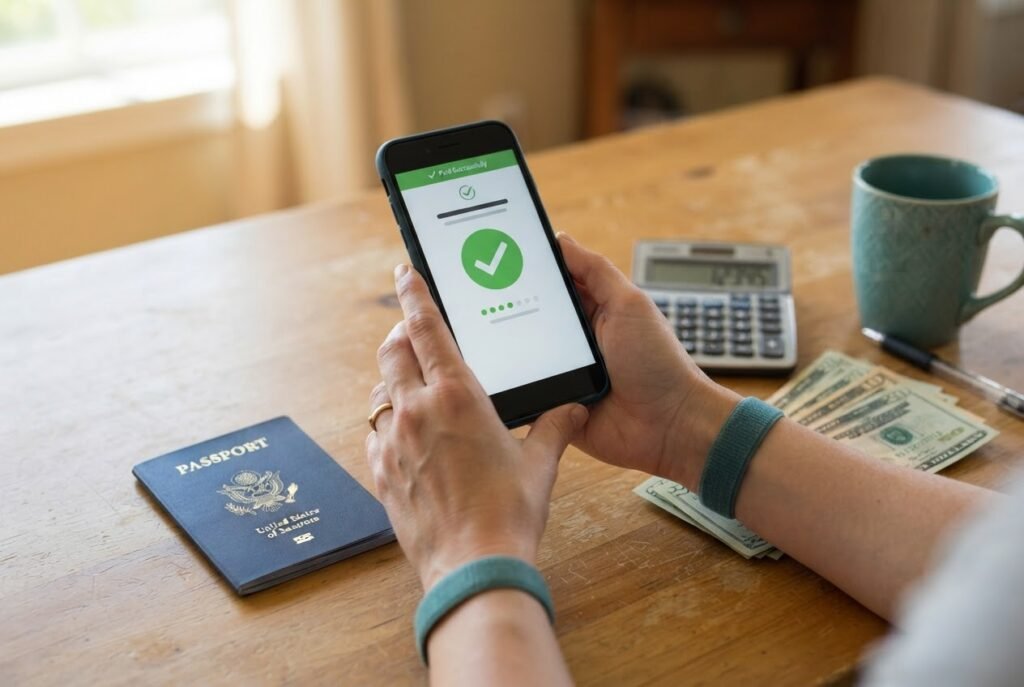
Here’s the catch: you can lose the whole bond. Overstaying, filing an extension or change of status late, not leaving within 10 days after a denied request, or applying for asylum all count as breaking the bond’s terms, according to the rule. You also have to arrive and depart by commercial air. Land and sea crossings don’t count, so a “fly into Miami, cruise out” plan won’t work.
Why is the US doing this? The rule says nationals of the 50 covered countries had 45,488 visitor-visa overstays in fiscal year 2024, and it frames the bond as a way to cut that number. With the bond in mind, here’s what the whole trip really costs before you buy a ticket.
How Much a US Visit Visa from Bangladesh Costs in 2026
| Cost | Amount | Refundable? | When |
|---|---|---|---|
| 📝 Visa application (MRV) fee | $185 | No | Before booking the interview |
| 🔐 Visa bond | $10,000, $15,000 or $20,000 | Yes, if you follow the rules | After approval, when instructed |
| 🧾 Visa integrity fee | $250 (if collection starts) | Possibly, under strict conditions | At visa issuance |
| 📸 Photo, printing, travel to Dhaka | Varies | No | Before the interview |
| 🏥 Travel health insurance | Varies by age and length | No | Before you fly |
Fee amounts as published by the State Department and the August 3, 2026 final rule. Checked November 2026.
Let’s run a real example. A retired couple from Chattogram wants to spend two months with their son in Michigan. Two MRV fees come to $370. If the officer sets a $15,000 bond for each of them, the son needs $30,000 available for a few months, which he’ll get back after they fly home on time. Add flights, insurance and pocket money, and you can see why planning matters. For the day-to-day side, our guide to daily travel costs in the USA by city helps you size the rest of the budget.
Medical bills in the US can be huge, so don’t skip insurance for older parents. Our comparison of visitor medical insurance for visiting parents was written for Indian families, but the plan types and coverage tips apply to Bangladeshi visitors too.
Documents and Financial Proof You’ll Need
Officers decide most B1/B2 cases on your answers, not on a pile of paper. Still, the right documents back up what you say. Bring originals, keep them in order, and only hand over what the officer asks for.
✅ B1/B2 document checklist (Dhaka)
- ☐ Passport valid for at least six months beyond your planned stay, plus old passports with past visas
- ☐ DS-160 confirmation page with the barcode
- ☐ Appointment confirmation and MRV fee receipt
- ☐ One recent photo meeting State Department photo rules (in case the upload failed)
- ☐ Proof of job or business: employer letter with leave approval, trade license, tax returns
- ☐ Bank statements for 6–12 months, salary statements or business income records
- ☐ Property papers, family ties (marriage certificate, children’s school records)
- ☐ Trip proof: invitation letter from family, conference letter, or hospital letter with cost estimate
- ☐ If someone in the US is paying: their letter, ID or status proof and recent tax return
How much bank balance do you need? There’s no official minimum. What matters is that your money makes sense for your life and your trip. A government officer earning a steady salary with a modest, consistent balance looks stronger than someone whose account jumped by lakhs of taka the week before the interview. Officers notice sudden deposits, and so do the bank statements.
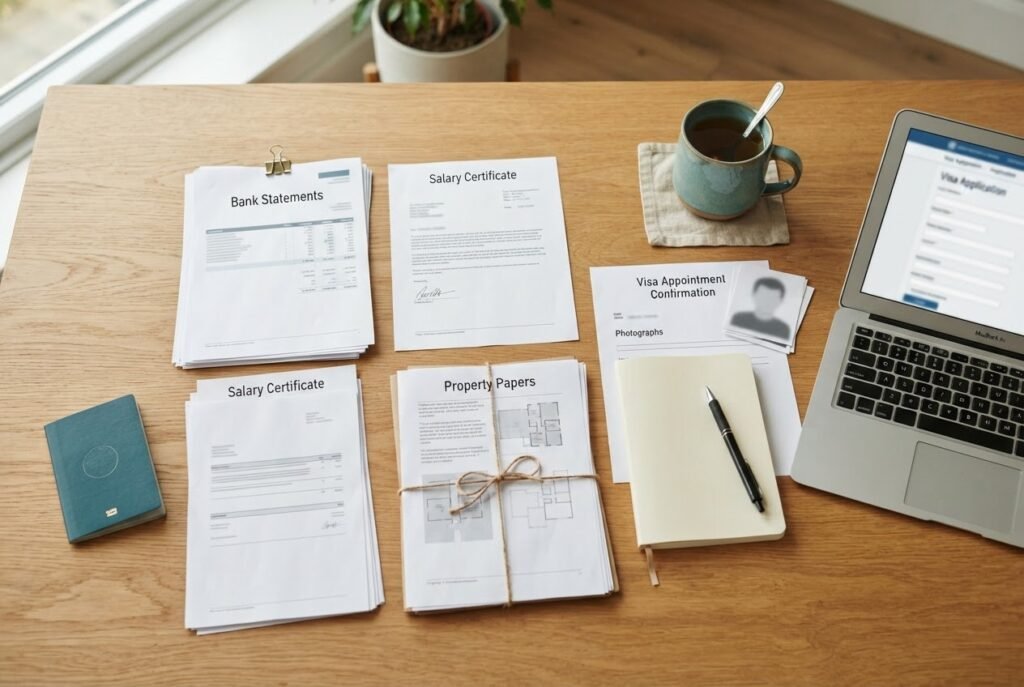
Once your papers are ready, the actual application is a series of simple steps. The order matters, so follow it closely.
How to Apply for a B1/B2 Visa from Bangladesh: 7 Steps
- Fill in the DS-160 on the State Department’s Consular Electronic Application Center. Answer every question honestly, list your social media handles as asked, and upload a compliant photo. Save your application ID so you don’t lose progress.
- Print the confirmation page. You’ll need its barcode number to book the interview.
- Pay the $185 MRV fee through the official appointment system linked from the U.S. Embassy Dhaka website. Keep the receipt.
- Book the interview with your passport number, DS-160 barcode and payment details. Take the first slot that works and keep checking for earlier cancellations.
- Attend the interview at the embassy in Baridhara, Dhaka. Arrive on time with only the documents you need; phones and bags are restricted.
- Pay the bond if approved, using only the link and amount the officer gives you. You may need to return your passport to the embassy afterward.
- Collect your passport and check the visa carefully: your name, passport number, entries, expiry date and the bond annotation.
You can track your case at any point with the status checker on the same CEAC website, using your application ID. That brings us to the part most people worry about.
The Dhaka Visa Interview: Questions and Tips
Most visitor visa interviews take just two or three minutes. The officer is trying to answer one question: will you go home on time? Under US law, every visitor is presumed to be an intending immigrant until they show otherwise, so your job is to show strong ties to Bangladesh.
| Common question | What the officer wants to know | A strong, honest answer sounds like |
|---|---|---|
| Why are you going to the US? | A clear, real purpose | “To attend my son’s graduation in Ohio on May 16 and travel for two weeks.” |
| Who will you stay with? | Your US contacts | “My brother, a green card holder in Queens, New York.” |
| What do you do in Bangladesh? | Your ties at home | “I’m a senior accountant at a pharma company. I’ve worked there nine years.” |
| Who is paying for the trip? | Funds that make sense | “I’m paying from my savings. My salary is Tk 1.2 lakh a month.” |
| When will you come back? | A firm return plan | “On June 2. My leave ends June 4.” |
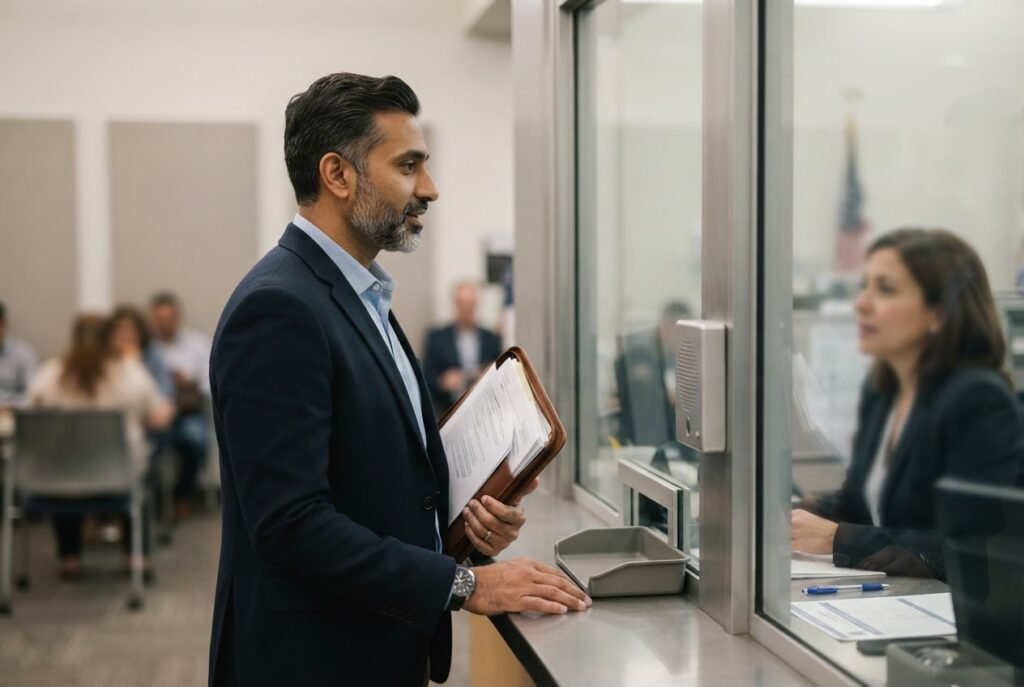
Picture two applicants on the same morning. The first hands over a 40-page file before being asked and gives a long speech about how much he loves America. The second answers each question in one or two sentences, in her own words, and only shows her leave letter when asked. Officers see hundreds of people a day. Calm, short and consistent wins.
- Know your DS-160 by heart. Your answers must match what you wrote, especially dates, addresses and employer details.
- Answer in English or Bangla. You can ask for an interpreter. Clear Bangla beats nervous English.
- Don’t memorize a script. Coached answers sound coached, and officers hear the same ones all day.
- Dress neatly and arrive early. It won’t win the visa, but it helps you feel calm.
After the Interview: Processing, Refusals and Reapplying
At the end of the interview, you’ll hear one of three things. Approved means the bond step comes next. A refusal under section 214(b) means the officer wasn’t convinced of your ties. A 221(g) slip means they need more documents or extra administrative processing, which can take weeks or longer.
What if you’re refused? There’s no appeal for a 214(b) refusal. The only route is to apply again with a new DS-160 and a new fee. Reapply only when something real has changed: a promotion, a business that has grown, a family event you can document, or a trip history to other countries. Our older advice to “appeal with more documents” was wrong for visitor visas, and we’ve corrected it here.
Got the visa? Congratulations. Now the rules shift from the embassy to the US border.
Your Stay in the USA: Entry, I-94, Extensions and Etiquette
A visa only lets you ask to enter. At the airport, a Customs and Border Protection (CBP) officer decides whether to admit you and for how long, often up to six months for tourists. That date is on your electronic I-94 record, not on the visa. Look it up on the official CBP I-94 website a day after you land.
Can you extend your stay? Yes, in some cases, by filing Form I-539 with USCIS before your I-94 date passes. But on a bonded visa, a late request or staying on after a denial can cost you the whole bond. If a family emergency comes up, talk to an immigration lawyer before your I-94 date, not after.
Overstaying is the one mistake you can’t undo. Staying more than 180 days past your date can trigger a 3-year bar on returning, and a year or more can trigger a 10-year bar. It also makes life harder for the next person from Bangladesh who applies.
Day to day, a few habits make the trip smoother:
- Carry medicines properly. Keep them in original packs with a prescription. Our guide to traveling to the USA with prescription drugs covers the details.
- Get a local SIM or eSIM on arrival so you can call family and use maps. See our picks for the best SIM cards for travelling to the USA.
- Learn the tipping rules. Waiters, taxi drivers and hotel staff expect tips, which can surprise first-time visitors. Our US tipping guide for tourists has a simple cheat sheet.
- Respect local customs. Lines are taken seriously, punctuality matters, and smoking is banned in most indoor public places.
- Don’t work, even informally. Helping at a relative’s shop for cash is work, and it can cost you the visa and the bond.
Mistakes That Sink B1/B2 Applications from Bangladesh
⚠️ Avoid these
- Paying the bond early or through an agent. Pay only through the link the officer gives you, after approval.
- Fake or “arranged” documents. A false bank statement or job letter can lead to a permanent ban for misrepresentation.
- DS-160 answers that don’t match your interview. Even small differences in dates raise doubts.
- Big last-minute deposits. They look borrowed, because they often are.
- Applying in another country to skip the Dhaka wait. Since September 2025 you’re expected to apply where you live.
- Planning a land or sea exit on a bonded visa. You must leave by commercial air to get your bond back.
- Booking flights before you have the visa. Buy refundable tickets or wait.
And once the visa is in hand, the fun part starts: choosing when to go. Our guide to the best time to travel in the USA breaks it down by season and region.
Frequently Asked Questions
How long does it take to get a US visa from Bangladesh?
The longest part is the interview wait. The State Department’s tool showed about 8.5 months for B1/B2 appointments in Dhaka in July 2026. After an approval, the bond payment and visa printing usually add a few more days to a few weeks, and 221(g) processing can take longer.
How much is the US visa fee in Bangladesh?
The B1/B2 application (MRV) fee is $185 and is not refundable. Approved applicants also pay a refundable visa bond of $10,000, $15,000 or $20,000, and a $250 visa integrity fee may apply if collection begins.
How much bank balance is required for a US tourist visa from Bangladesh?
There’s no fixed minimum. The officer looks for funds that match your income, job and trip cost, with a steady history rather than a sudden deposit.
Do I get the US visa bond money back?
Yes, without interest, if you leave the US on time through a commercial airport and follow your visa’s terms, or if you never use the visa. Overstaying, late extension requests or applying for asylum can mean losing the whole bond.
Can I extend my stay beyond the date on my B1/B2 visa?
You can ask USCIS for an extension on Form I-539 before your I-94 date expires, but approval isn’t guaranteed. On a bonded visa, a late request or failing to leave within 10 days of a denial can forfeit the bond, so get legal advice first.
Can children under 14 skip the interview?
Usually not anymore. Since September 2, 2025, most applicants, including young children and people over 79, need an in-person interview. Renewals of a full-validity B visa within 12 months of expiry may still qualify for a waiver.
The Bottom Line
A B1/B2 visa from Bangladesh in 2026 takes three things: patience for the Dhaka wait, honest answers that show your life is in Bangladesh, and enough money set aside for the $185 fee plus a refundable bond of up to $20,000. None of it is impossible. Families get approved every week when they plan early and keep their story simple and true.
Start your DS-160 this week, check the current wait time, and talk with your US family about the bond before your interview date. Rules are still changing, so read the embassy’s latest notice a week before you go.
Keep learning: more USA trip guides from Touring Diary Adventure
Sources: U.S. Department of State (visitor visas, global visa wait times, CEAC); Federal Register final rule on visa bonds, 91 FR 48757 (Aug 3, 2026); U.S. Embassy Dhaka; U.S. Customs and Border Protection (I-94); USCIS (Form I-539); The Business Standard and The Daily Star reporting on Bangladesh’s visa bond (Jan and Aug 2026). Checked November 2026. This guide is general information, not legal advice.
Applying soon? Tell us your interview month in the comments, and we’ll share what to double-check before you go.
Going to the US to study rather than visit? Our F-1 student visa airport document checklist shows exactly what to carry at the port of entry in 2026.