
The best SIM card for USA tourists in 2026 is, for most short trips, an eSIM from one of the big US networks. T-Mobile’s new U.S. Pass eSIM costs $25 for 7 days with 50GB of fast data and unlimited US calls and texts, and AT&T now sells its own visitor eSIM too. Staying a month or longer? A prepaid SIM with a US phone number is usually better value.
This guide compares every real option a visitor has today: carrier eSIMs, prepaid SIM cards, travel eSIM apps and roaming on your home plan. You’ll see current prices, which phones work, how to set things up at the airport, and the mistakes that leave people without data on day one.
📱 Quick Answer: Which SIM Should You Get?
- 1–2 week trip: T-Mobile U.S. Pass eSIM ($25 for 7 days, $30 for 10, $35 for 14). Calls, texts and 50GB of fast data.
- Just a day or two: AT&T’s eSIM day pass, from $3.99 a day.
- A month or more: a prepaid SIM or eSIM with a US number, such as Lyca Mobile (list prices $33–$59 for 30 days).
- Data only, set up before you fly: a travel eSIM app (Airalo, Saily, Holafly, Nomad).
- Must-have: an unlocked phone. For eSIM, your phone must also support eSIM.
In this guide
How US Mobile Networks Work (in 60 Seconds)
The US has three national networks: AT&T, T-Mobile and Verizon. Almost every other brand you’ll see, including Lyca Mobile, Mint and most travel eSIMs, rents space on one of those three. So the real question isn’t “which brand?” but “which network, at what price, with what extras?”
All three cover big cities well. The differences show up in rural areas, mountains and national parks, where one network may have signal and the others don’t. That’s why a road-tripper and a New York city-breaker can need different SIMs. We’ll come back to coverage below.
One more thing before you compare plans: your phone has to be unlocked, meaning it isn’t tied to your home carrier. The FCC’s cell phone unlocking guide explains how it works in the US; at home, ask your carrier to unlock it before you travel.
Best SIM Card for USA Tourists: 2026 Comparison
Here’s how the main options stack up. Prices were checked on November 20, 2026, and most don’t include US taxes and fees, which add a few dollars.
| Option | Price | Data | Calls & texts | Best for |
|---|---|---|---|---|
| 📶 T-Mobile U.S. Pass eSIM | $25 / 7 days, $30 / 10 days, $35 / 14 days | 50GB premium, then unlimited slower data; 14–28GB hotspot | Unlimited in US, Mexico, Canada | Most 1–2 week trips |
| 📶 eSIM by AT&T | From $3.99 / day; up to $59.99 for 30 days (North America) | Unlimited, 5GB hotspot | Announced as “coming soon” at launch | Short stays and stopovers |
| 📞 Prepaid SIM/eSIM (e.g. Lyca Mobile) | $33–$59 list per 30 days (promos often lower) | 18GB to 40GB high-speed | Unlimited US; some include international calls | Stays of a month or more |
| 🌍 Travel eSIM apps | About $20–$30 for 7 days unlimited | Fixed GB or unlimited | Usually data only, no US number | Setting up before you fly |
| ✈️ Roaming on your home plan | Varies widely by country and carrier | Often limited | Your normal number | Very short business trips |
Sources: T-Mobile Prepaid, Android Authority (AT&T launch, May 2026), Lyca Mobile, BuddySIM eSIM comparison (Nov. 2026). Check the provider’s page before buying.
Let’s put that into a real trip. Priya flies from London to Orlando for 12 days with her family. She buys the T-Mobile 14-day U.S. Pass for $35 at the airport, uses Google Maps in the rental car and video-calls home every night. Her friend Daniel spends six weeks in Chicago on a work placement and needs a local number for apartment viewings, so a monthly prepaid plan makes more sense for him. Same country, two different right answers.
Our Picks, Explained
1. Best overall: T-Mobile U.S. Pass eSIM
T-Mobile launched its U.S. Pass eSIM for international visitors in May 2026, and it’s the simplest strong deal for most tourists. Every pass includes 50GB of premium 5G data (then unlimited at lower speeds), unlimited talk and text across the US, Mexico and Canada, and 5GB of high-speed data in Mexico and Canada.
- Prices: $25 for 7 days (14GB hotspot), $30 for 10 days (20GB hotspot), $35 for 14 days (28GB hotspot). A 30-day pass with 50GB of hotspot is also listed.
- Good to know: no contract, no ID, no auto-renewal. It’s non-refundable once active, and calls to other countries need the $15 Stateside International add-on.
- The catch: T-Mobile’s FAQ says you buy it once you’re in the US, through the T-Mobile Prepaid eSIM app or website, and it starts as soon as you buy. You’ll need Wi-Fi to set it up, so plan to do it at the airport.
2. Best for a day or two: eSIM by AT&T
AT&T launched its own visitor eSIM the same week. According to Android Authority’s launch report, passes come in 1, 7, 15 and 30 days, starting at $3.99 for a single US day and going up to $59.99 for 30 days across North America, taxes and fees included. Data is unlimited with 5GB of hotspot, and you set it up in the AT&T Connect on Demand app. At launch, calls and texts were listed as “coming soon,” so check before you rely on it for phone calls.
3. Best for long stays: a prepaid plan with a US number
Studying, working or visiting family for a month or more? A monthly prepaid plan gives you a real US number that banks, landlords and delivery apps will accept. Lyca Mobile, for example, lists 30-day plans at $33 (18GB high-speed, with unlimited international calls to 100 countries), $49 and $59, and often runs first-months promotions. You can get a physical SIM shipped or an eSIM you activate on landing.
4. Best to set up before you fly: travel eSIM apps
Apps like Airalo, Saily, Holafly and Nomad let you install a US eSIM at home and switch it on when you land. In BuddySIM’s November 2026 comparison, 7-day unlimited US plans ranged from about €17 to €26 (roughly $20–$30). The trade-off: they’re usually data only, with no US phone number, so you’ll call and text through WhatsApp or FaceTime.
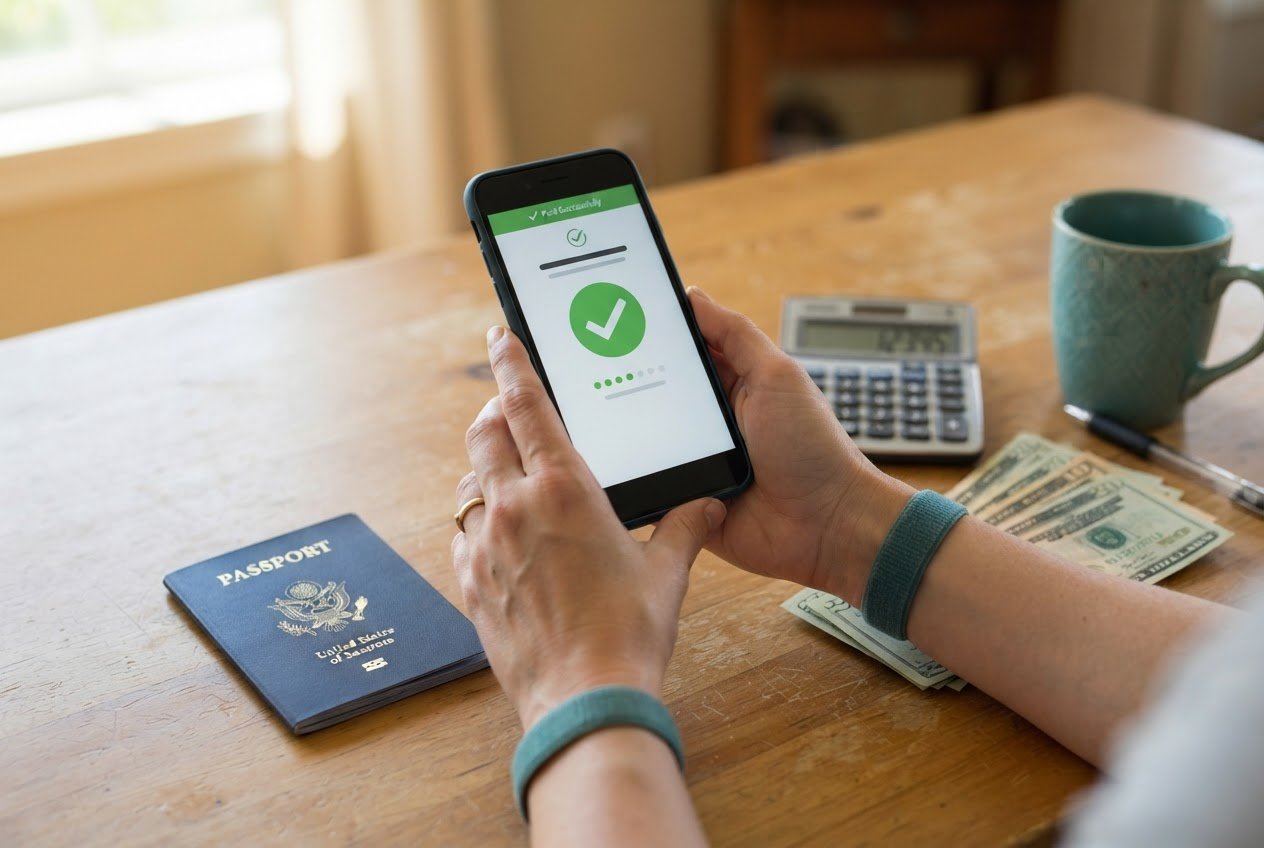
Now that you know the options, the next question is whether your phone can take an eSIM at all.
eSIM vs Physical SIM in the USA
An eSIM is a digital SIM you download by scanning a QR code or tapping a link. A physical SIM is the small chip you push into your phone. Both work on US networks. For visitors, eSIM is now the easier route, because you skip the store and many of the best visitor deals are eSIM-only.
| Question | eSIM | Physical SIM |
|---|---|---|
| Need to visit a store? | ✅ No | Often, or wait for shipping |
| Set up before you fly? | ✅ Many can (travel apps) | Only if shipped to you |
| Works on older phones? | Only eSIM-capable phones | ✅ Almost any unlocked phone |
| Keep home SIM active too? | ✅ Yes, on dual-SIM phones | Only on dual-slot phones |
| Easy to lose? | ✅ Nothing to lose | Tiny chip, easy to misplace |
Not sure if your phone supports eSIM? On an iPhone, go to Settings, then Cellular, and look for “Add eSIM.” On Android, look under Settings, then Network or Connections, then SIM manager. If you don’t see it, choose a physical SIM.
How Much Data Do You Need in the USA?
Most tourists use less than they fear. Maps, messaging, email and social media are light; video calls, streaming and hotspotting a laptop are heavy. Here’s our rule of thumb from planning many US trips:
| Your style | About 1 week | About 2 weeks |
|---|---|---|
| 🗺️ Light: maps, WhatsApp, email | 3–5GB | 5–10GB |
| 📸 Medium: plus social media and photo uploads | 5–10GB | 10–20GB |
| 🎥 Heavy: video calls, streaming, hotspot | 15GB+ or unlimited | Unlimited |
Our planning estimates; your use depends on your apps and settings.
That’s why the 50GB in T-Mobile’s pass is plenty for almost everyone. If you’ll be driving, download offline maps for your route before you leave the hotel Wi-Fi. Renting a car? Our guide on renting a car in the USA without a US license covers the paperwork.
How to Get Connected When You Land: 6 Steps
Here’s the order that works, whether you’re landing at JFK or Atlanta.
- Before you fly: confirm your phone is unlocked and supports eSIM. Update its software.
- Turn off roaming on your home SIM before the plane lands, so you don’t pay home-network fees.
- Join the free airport Wi-Fi after landing.
- Buy and install your eSIM in the carrier’s app (or switch on the travel eSIM you installed at home). For a physical SIM, insert it now.
- Set the US line for mobile data and turn on data roaming for that line only if the provider says to.
- Test it: open a map and send a message before you leave the terminal. If data doesn’t work, restart the phone and check the APN settings the provider gives you.
Coverage in Cities, National Parks and Road Trips
In cities, any of the three networks will serve you well. Out in the desert, the mountains or a big national park, signal can drop to nothing for an hour or more. Picture this: you’re driving between two parks in Utah, the map stops loading, and your next turn is 40 miles away. A little planning prevents it.
- Check the map: the FCC National Broadband Map shows mobile coverage by provider for any US address.
- Download offline maps for every park and long drive.
- Tell someone your route when you hike or drive remote roads.


Mistakes to Avoid
⚠️ Common SIM mistakes tourists make
- Arriving with a locked phone. No US SIM or eSIM will work. Unlock it at home first.
- Buying T-Mobile’s pass too early. It starts the moment you buy it, and T-Mobile says to buy it in the US.
- Leaving home roaming on. One background app update can cost more than your whole US plan.
- Expecting a US number from a data-only eSIM. Most travel eSIM apps don’t include one.
- Forgetting taxes and fees. Most US prepaid prices are quoted before tax.
- Deleting the eSIM by accident. Many eSIMs can’t be reinstalled once deleted. Keep the QR code and email.
Lost your SIM or phone mid-trip? Don’t panic. Our guides on what to do if you lose your SIM card in the USA and documents needed for a SIM replacement walk you through it.
✅ Pre-Trip Phone Checklist
- ☐ Phone unlocked by your home carrier
- ☐ eSIM support confirmed (or physical SIM ordered)
- ☐ Offline maps downloaded
- ☐ Home SIM roaming turned off
- ☐ WhatsApp or similar set up for free calls
- ☐ eSIM QR code and confirmation email saved
Frequently Asked Questions
What is the best SIM card for tourists in the USA?
For most trips of one to two weeks, T-Mobile’s U.S. Pass eSIM is the best value: $25 for 7 days, $30 for 10 days or $35 for 14 days, with 50GB of fast data and unlimited US calls and texts. For stays of a month or longer, a prepaid plan with a US number is usually better.
Can I use my own phone with a US SIM card?
Yes, as long as it’s unlocked. For an eSIM, your phone must also support eSIM. Ask your home carrier to unlock it before you travel.
Is it better to buy a SIM card at the airport or online?
For an eSIM, buy it online or in the provider’s app; T-Mobile’s visitor pass is bought once you’re in the US. Physical SIMs at airport shops are convenient but often cost more than buying online or at a big-box store.
How much data do I need for a week in the USA?
Light users (maps, messaging, email) usually need 3–5GB a week. Add social media and photo uploads and plan on 5–10GB. Heavy video calling or streaming needs an unlimited plan.
Do US tourist eSIMs come with a phone number?
Carrier plans like T-Mobile’s U.S. Pass include calls and texts. Most travel eSIM apps are data only, so you’d call through apps like WhatsApp. Monthly prepaid plans give you a full US number.
Can I top up my US SIM if I run out of data?
Yes. Most prepaid plans and eSIM apps let you add data or buy a new pass in the app or online. Check for taxes and fees before you pay.
The Bottom Line
Staying connected in the US is cheaper and easier in 2026 than it’s ever been. For a typical one- or two-week trip, unlock your phone, land, join the airport Wi-Fi and buy T-Mobile’s U.S. Pass eSIM. Just passing through? AT&T’s day pass covers you. Staying a month or more, or need a local number? Go with a monthly prepaid plan. Do that, and the only thing you’ll worry about is which photo to post first.
Still planning your budget? See our daily travel costs in the USA by city, and brush up on tipping in the USA before your first restaurant meal.
Keep learning: more USA travel tips from Touring Diary Adventure
- What to do if you lose your SIM card in the USA
- 7 best apps for translating menus while traveling
- Best free flight tracker apps
Sources: T-Mobile Prepaid (U.S. Pass eSIM plans and FAQ); Android Authority (eSIM by AT&T launch, May 2026); Lyca Mobile (2026 tourist SIM plans); BuddySIM (USA eSIM price comparison, Nov. 2026); FCC (cell phone unlocking guide, National Broadband Map). Prices checked November 20, 2026.
Which SIM or eSIM did you use on your last US trip? Share your experience in the comments to help other travelers.



Pingback: What documents should I carry when visiting a service center for SIM replacement in USA?